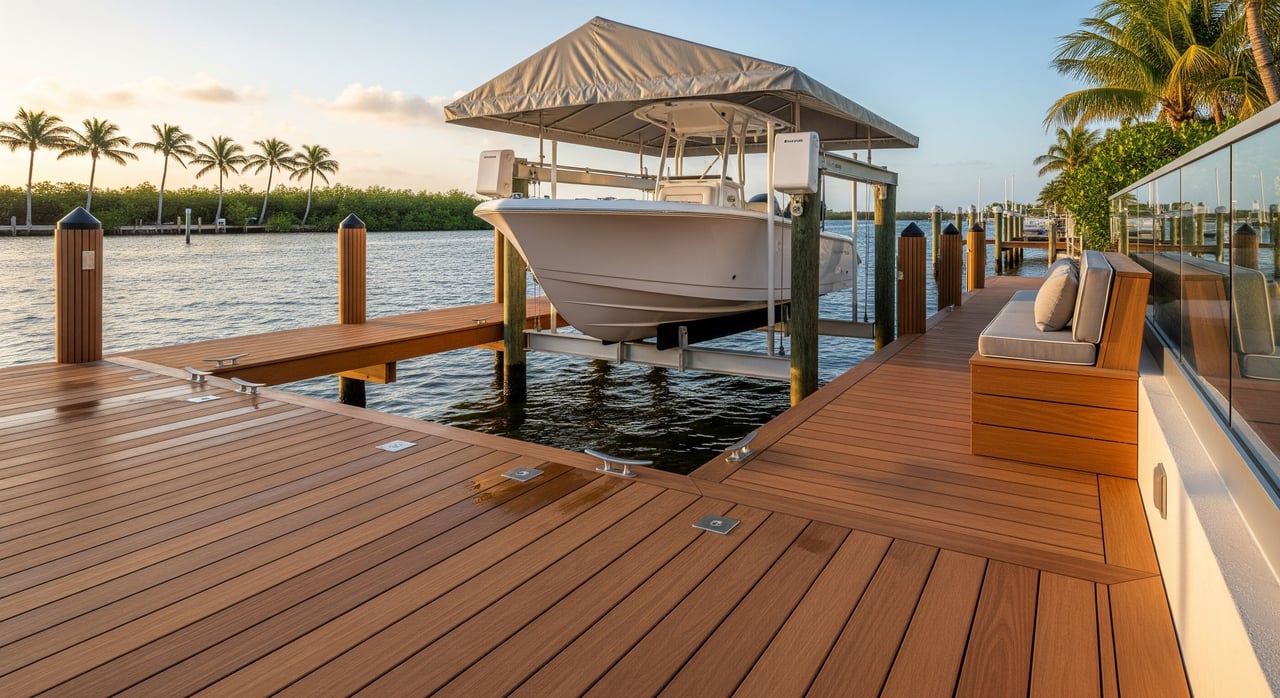
Thinking about adding a dock and lift to your WildBlue home but not sure where to start? You are not alone. Between HOA approvals, permits, environmental rules, and choosing the right lift, it can feel complex. This guide breaks it down into clear steps so you can plan with confidence, protect your shoreline, and get the setup that fits your boat and lifestyle. Let’s dive in.
Plan your path to approval
Start with WildBlue ARC
Your first stop is the WildBlue Architectural Review Committee. You will submit a design package that typically includes your dock layout, lift type, materials, finish colors, and a construction timeline. ARC standards often address setbacks from property corners, visible hardware, and overall scale.
Start this early. ARC decisions are made on a schedule, and reviews can take weeks. Getting your HOA approval in place keeps the rest of your permitting on track.
County, state, and federal permits
After ARC sign-off, you will move into permitting. In Lee County, building permits and any pile or shoreline structure permits are handled by county divisions that enforce local codes, flood and construction standards, and septic or wastewater considerations.
If your project affects tidal waters, submerged lands, seagrasses, or mangroves, you may also need permits from the Florida Department of Environmental Protection. The Southwest Florida Water Management District can be involved for certain water resource impacts. The U.S. Army Corps of Engineers typically reviews work in navigable waters or below mean high water.
Expect variable timelines. County permits can take weeks to months, and state or federal reviews may add time if environmental impacts are likely. A professional survey and shoreline assessment at the outset help reduce delays.
Choose the right dock and lift
Dock types explained
- Fixed pile-supported docks. Durable and traditional, with timber, composite, or concrete decking. Good for shallow to moderate depths.
- Floating docks. The deck rides on floats, which can be useful where water levels vary. Often simpler and less invasive to the seabed.
- Piling-mounted docks with gangways. Helpful when you need an adjustable connection because of slope or tidal range.
Material choice matters. In salt and brackish conditions, look for marine-grade aluminum, stainless fasteners, and corrosion-resistant components. Open-grate decking can reduce shading over sensitive plants.
Boat lift options and capacities
- Vertical lifts. Lift straight up and are space-efficient with higher capacities.
- Cantilever or overhead cable lifts. Often used for pontoons and larger boats.
- Floating boat lifts. Simpler systems that use buoyancy but may be limited in capacity and stability.
- PWC lifts. Compact units sized for one or two personal watercraft.
Typical capacity ranges include about 1,000 to 2,500 pounds for PWCs, 3,000 to 6,000 pounds for small runabouts, 6,000 to 10,000 pounds for medium outboards, and 10,000 to 20,000-plus pounds for larger center consoles and small cabin cruisers. Add a 20 to 30 percent safety margin above the boat’s dry weight to cover fuel, water, and gear. Always verify the manufacturer’s specifications.
Plan for electrical needs. Larger lifts often require shore power with dedicated circuits and GFCI protection. Coordinate conduit routing and electrical permits during design.
Build with storms in mind. Specify hardware and design loads suited to hurricane-prone conditions and have a clear storm procedure for your lift and dock.
Shoreline and environmental factors
Seagrasses and mangroves
Submerged seagrasses and coastal vegetation are protected resources in many parts of Lee County. Designs that shade or damage seagrass may require changes, such as elevating the deck or using open-grate surfaces. Mangrove trimming or removal usually requires permits and must follow approved methods. Plan for surveys or mitigation if sensitive habitat is present.
Setbacks, size, and shading
Your ARC and county permits may set limits on dock length, width, and setbacks from property lines, along with clearances for navigation. To minimize shading, some projects are required to use narrower decks, higher elevations, or light-permeable materials.
When permits expand
Work channelward of the mean high water line, new pilings, mangrove work, or seawall replacement can trigger additional reviews and extend timelines. Early coordination with environmental reviewers helps you anticipate requirements and stay on schedule.
Vendors, contracts, and pre-construction
Pre-construction checklist
- Obtain WildBlue ARC guidelines and covenants for materials, colors, setbacks, and construction hours.
- Invite 2 to 3 marine contractors for a site visit and written estimate, and confirm who manages permitting and whether fees are included.
- Request a shoreline assessment and any needed surveys early.
Vetting your marine contractor
- Licensing. Verify Florida contractor registration and local licensing. Confirm experience with recent Lee County dock and lift projects.
- Insurance. Require current general liability and workers’ compensation certificates, with you listed as additional insured if needed.
- References and photos. Ask for three recent local references and examples of similar docks and lifts.
- Warranty and maintenance. Get workmanship and parts warranties in writing and clarify who handles post-install inspections.
- Cost breakdown. Ask for line items for design, engineering, pilings, decking, lift model, electrical, mobilization, demo, and permit fees.
What to include in your contract
- Scope of work with specific materials and model numbers.
- Allowances for unknown conditions, including unit prices for additional piles or repairs.
- Schedule with key milestones: permit submittal, expected approvals, start date, and completion.
- Payment schedule tied to milestones, not large up-front sums.
- Cleanup and debris removal responsibilities.
- Clear change-order procedures.
Timeline expectations
- HOA and ARC review. Often a few weeks to a couple of months.
- County permits. A few weeks to a few months depending on complexity.
- State and federal reviews. Several months if seagrasses, mangroves, or submerged lands are impacted.
- Construction. Small dock and lift projects can take days to a few weeks, with larger or seawall work taking longer.
Budget, insurance, and maintenance
Cost drivers and ranges
Costs vary based on materials, footprint, water depth, number of pilings, lift capacity, and electrical work. A simple floating dock is often the lower-cost option, while fixed pile-supported docks with premium decking and larger lifts command higher budgets. PWC lifts can be a few thousand dollars. Custom, high-capacity hydraulic systems can reach the tens of thousands. Permitting, engineering, and any mitigation measures add time and cost. Seawall work is often among the largest line items if required.
Insurance to review
Check your homeowner’s policy for coverage of docks, lifts, and detached structures. Coordinate with your boat insurer for haul-out, storage, and lift-related coverage if appropriate. For contractors, collect current general liability and workers’ compensation certificates before work starts. If community rules apply, confirm how HOA policies interact with your responsibilities.
Maintenance calendar and hurricane prep
- Inspect annually. Review pilings, decking, fasteners, motors, winches, straps or cables, and electrical connections. Replace corroded parts and treat decking as needed.
- Service equipment. Schedule electrical checks and motor servicing per manufacturer guidance. Clean and lubricate moving parts.
- Prepare for storms. Agree on a hurricane plan with your vendor. Many manufacturers recommend removing boats from lifts before major storms. Some owners lower lifts, remove lift components, or use engineered storm-fastening systems. Inspect your seawall and shoreline after significant weather.
Your next step
Every WildBlue waterfront is unique. The right plan balances ARC standards, permitting, shoreline conditions, and your boat’s needs. If you want a second set of eyes on feasibility or connections to trusted marine contractors, our team can help you move from concept to confident decisions.
Ready to align your dock and lift with your long-term property goals? Contact the Waterfront Lifestyle Group for concierge guidance backed by local expertise.
FAQs
Do I need HOA approval before county permits in WildBlue?
- Yes. Start with WildBlue ARC approval, then use those plans for county and any state or federal permits.
What permits are required for a dock or lift in Lee County?
- Expect county building and shoreline structure permits, with possible state, water management district, and U.S. Army Corps reviews if waters or habitats are affected.
Can I trim or remove mangroves to build a dock?
- Mangroves are protected. Trimming or removal often requires permits and specific approved methods, and may involve mitigation.
How do I size a boat lift for my boat?
- Choose a lift that exceeds your boat’s dry weight by about 20 to 30 percent to cover fuel, water, and gear, and confirm the manufacturer’s specs.
Who pays for seawall repairs if the wall protects multiple properties?
- Responsibilities depend on covenants and ownership. Review your WildBlue documents and coordinate with neighbors as required.
What happens to my dock and lift during hurricane season?
- Follow a hurricane plan. Many vendors recommend removing the boat from the lift for major storms and securing or lowering lift components per manufacturer guidance.
How much will a dock and lift cost in Lee County?
- PWC lifts can be a few thousand dollars, while custom, high-capacity systems and pile-supported docks can reach the tens of thousands. Permits, engineering, and mitigation add cost.
How long will permitting take for a WildBlue dock?
- HOA reviews often take weeks, county permits can take weeks to months, and state or federal reviews can take months if habitats or submerged lands are involved.
What should I require in a contractor contract?
- A detailed scope, model numbers, allowances for unknowns, milestone-based payments, schedule, cleanup, and a clear change-order process.
What insurance should I have for my dock and boat?
- Confirm homeowner’s coverage for docks and lifts, maintain boat insurance for lift or haul-out needs, and collect contractor liability and workers’ compensation certificates.