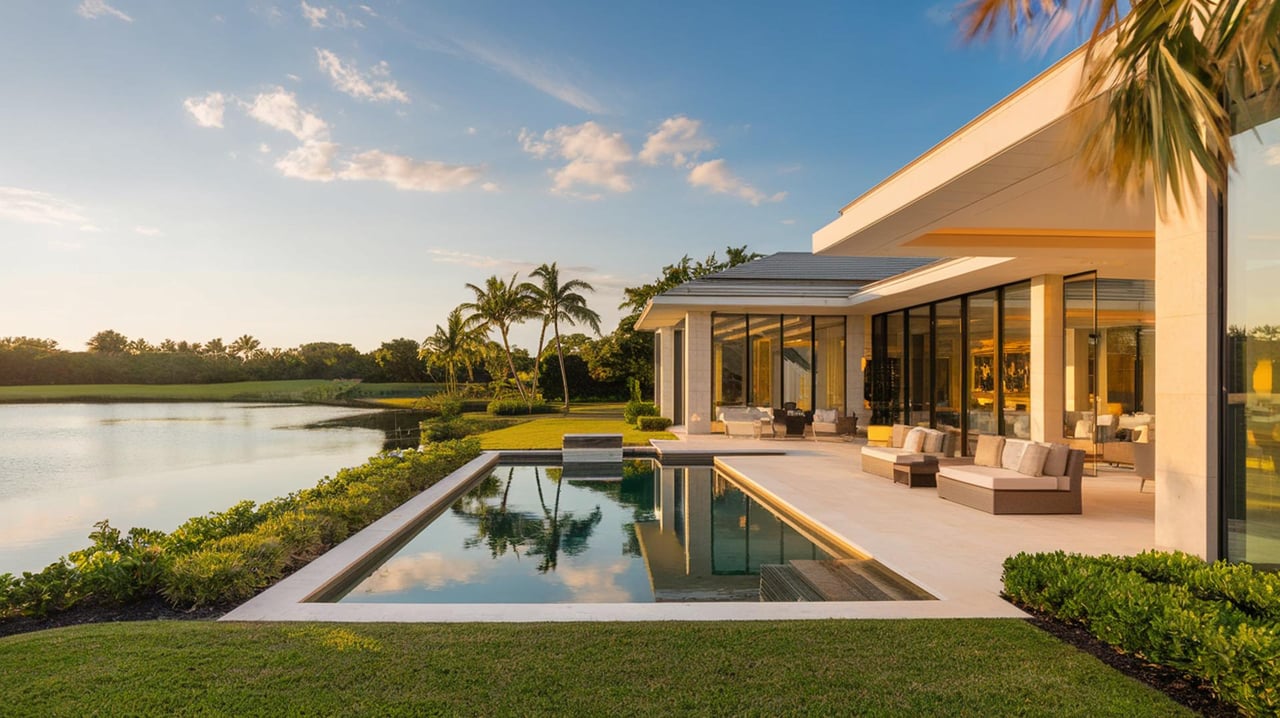
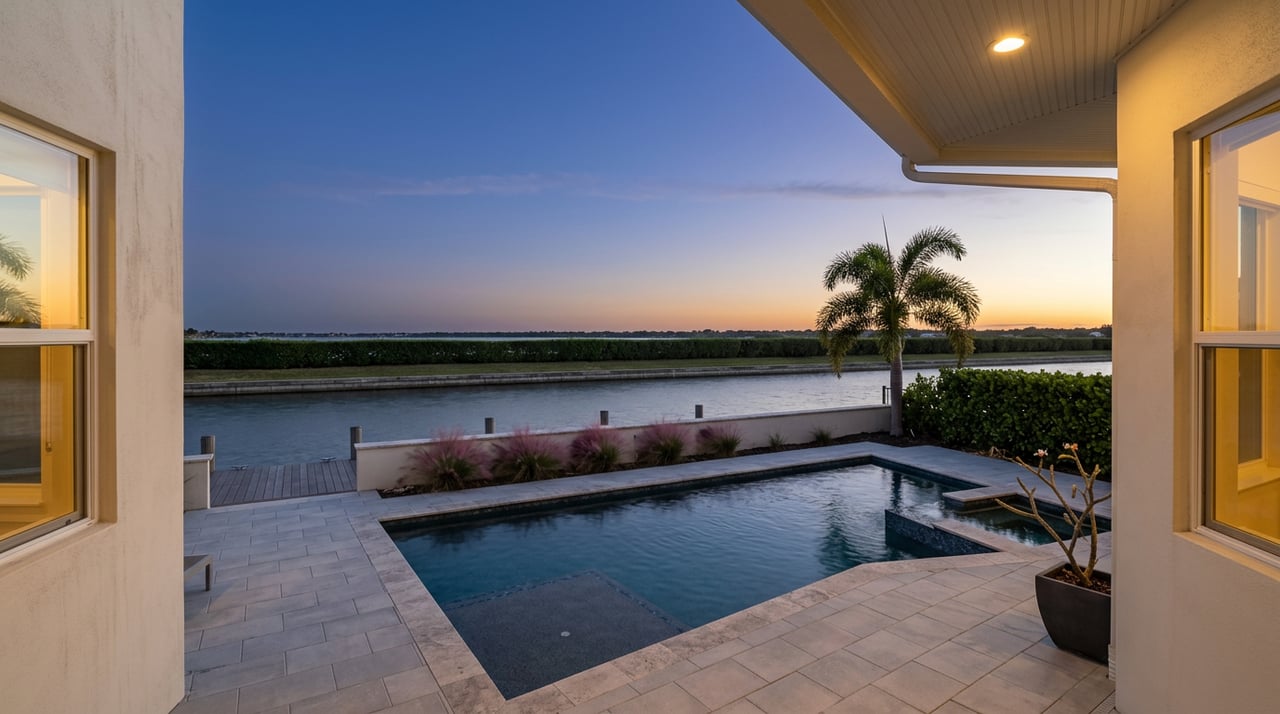
Compare two Cape Coral waterfront listings in a similar price bracket. A direct gulf-access home and a freshwater-canal home can have different flood zones, insurance costs and seawall expenses. The listing sheet alone may not show those details.
Before writing an offer, review the flood zone determination and the seawall's actual condition. Both can affect what a waterfront property costs to own, beyond the dock, the lot width, or the boat lift.
"Gulf Access" Is One Label Covering Three Different Risk Profiles
Cape Coral's canal system runs through three tiers. Direct gulf-access lots connect straight to open water. Indirect gulf-access lots route through other canals before reaching it. Freshwater canal lots sit in a closed system with no river or Gulf connection at all.
The flood map tracks that hierarchy almost exactly. Direct gulf-access lots face storm-surge exposure because the same canal that carries your boat to open water also carries storm surge back to your yard. Indirect access can also face surge exposure. A fixed bridge or a canal lock slows surge slightly. Freshwater canal lots, by contrast, have no surge pathway into a closed system.
Two homes advertised the same way in the MLS can sit on opposite sides of that line, and the line is what actually prices the insurance.
The Elevation Certificate Is the Document That Sets the Real Number
Base Flood Elevation in Cape Coral varies by location and drainage. Every foot a home sits above that elevation lowers its NFIP premium. The document that proves where a specific house actually sits, the elevation certificate, costs $300 to $600 to obtain from a licensed Florida surveyor. Skip it and an insurance quote is an estimate that can run 30 to 50 percent below what the policy actually costs once underwriting pulls the real number.
Cape Coral has one advantage working in a buyer's favor here. The City of Cape Coral says the city carries a Community Rating System Class 5, one of the stronger ratings in Florida, which means Special Flood Hazard Area owners in Zone AE or VE get an automatic 25 percent discount on NFIP premiums, and Zone X owners get 10 percent off. That discount applies before you negotiate anything. It just doesn't close the gap between zones, it only softens it.
What the Gap Actually Looks Like in Dollars
At current 2026 rate levels, here is what that split typically looks like on paper:
| Direct gulf-access | Freshwater canal or dry lot | |
|---|---|---|
| Typical annual flood premium | $3,500 to $7,000+ (older homes with claim history can run $8,000 to $12,000) | Often under $1,000, sometimes optional |
| Typical homeowners premium | Roughly $2,500 to $3,000 | Similar or slightly lower on newer construction |
| Approximate total insurance carry | $6,000 to $9,500+ a year | Frequently under $2,000 a year on modern concrete block homes with a recent roof |
| CRS discount | 25 percent | 10 percent |
Wilcox Family Insurance notes that some existing NFIP policies are assumable at closing. A buyer who checks for one before waiving that contingency can sometimes inherit a seller's older, lower rate instead of starting fresh at today's pricing.
The Seawall Underneath All of It
Seawall condition and maintenance deserve a close look before an offer.
For decades, Cape Coral seawalls were built from precast concrete panels, and that approach got expensive fast after storms like Hurricane Irma. Cape Coral's City Council changed that with Resolution 45-18 on February 20, 2018, opening the door to vinyl seawall systems as a more affordable option. The council followed with new engineering design standards in November 2021, effective March 1, 2022, adding stricter height and material requirements, particularly for homes on river and saltwater canals, the same lots most likely to carry direct gulf access.
Replacing a seawall in 2026 typically runs $400 to $900 per linear foot, with canal-front walls generally pricing toward the lower end of that range and open-water exposure pushing costs toward the top. This isn't a hypothetical line item. Cape Coral's Yacht Club neighborhood is currently working through a $23 million seawall project. Buyers should ask about assessment history on a canal-front HOA or civic association before closing.
Where This Actually Shows Up in a Transaction
A pre-listing marine inspection in Cape Coral runs $500 to $800 in 2026 and takes under two hours on a standard residential lot. It has become common enough in 2026 that agents on both sides of a deal now build it into the standard due-diligence menu alongside the four-point inspection and the wind mitigation report. What that inspection buys isn't the option to avoid the seawall conversation, it's control over when that conversation happens.
The pattern shows up in the market data too. A Cape Coral report covering closings through March 2026 put the citywide gap between median asking price per square foot and median sold price per square foot at 15.3 percent. Some of that spread is ordinary negotiation. Some of it is sellers finding out about a flood zone surprise or a seawall problem after an offer is already on the table, at the exact point in a contract where there's the least room to absorb it.
The fix runs the same direction for both sides of the table. Sellers who commission a marine inspection and pull a current insurance quote before listing walk into negotiations with a number they chose. Buyers who request the elevation certificate and ask about assessment history before writing an offer aren't relying on a listing sheet that was never built to carry that information in the first place.
What This Means If You're Comparing Two Listings
The "gulf access" tag tells you the boat gets out. It doesn't tell you which flood zone the house sits in, how far above Base Flood Elevation it sits, who's responsible for the seawall, or whether that seawall has years left in it. Those four answers, not the dock length or the asking price, are what actually separate two homes that look identical on paper.
If you're comparing canal-front properties in Cape Coral, or anywhere else along Southwest Florida's gulf-access corridor, the conversation worth having before you write an offer or sign a listing agreement is the one about the elevation certificate, the flood zone letter, and the seawall's maintenance history. Waterfront Lifestyle Group works these waterfront and boating-community transactions every day and can help you get those documents in hand before they become a surprise in week two. Work with us to get a clear read on what a specific waterfront property actually costs to own, not just what it costs to buy.
This article is general information, not legal, tax or financial advice. Consult a qualified professional about your situation.