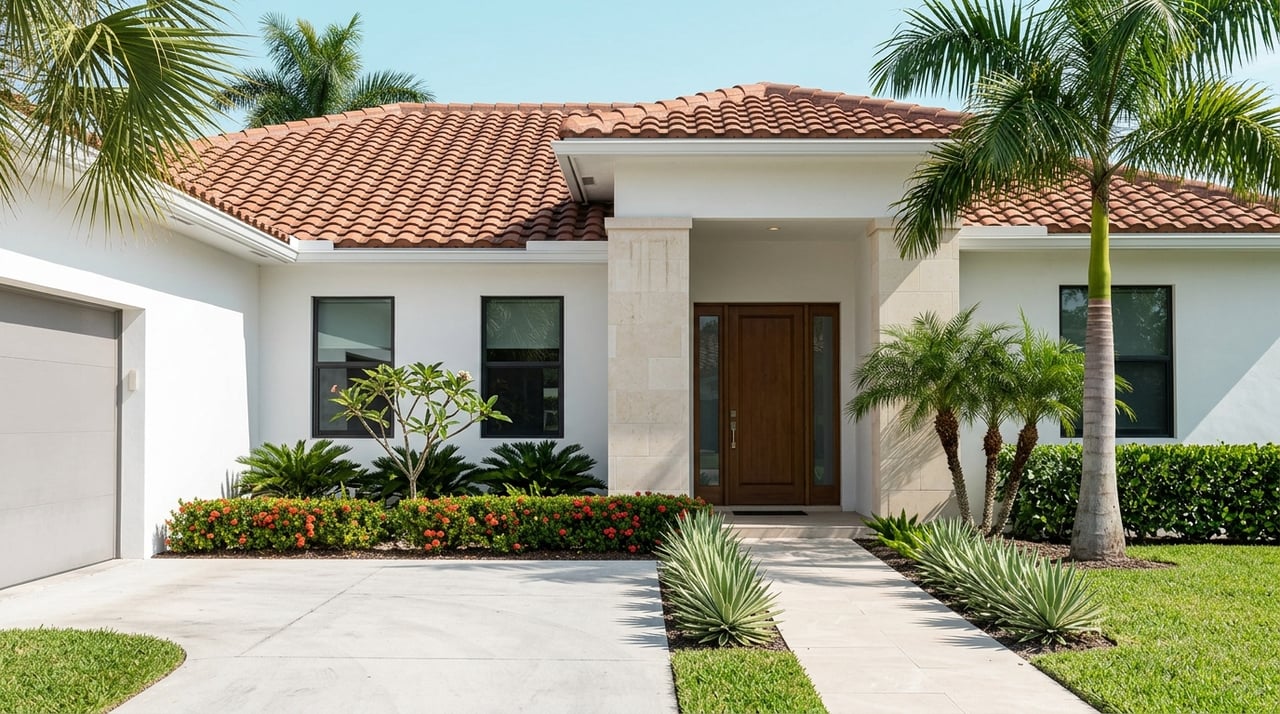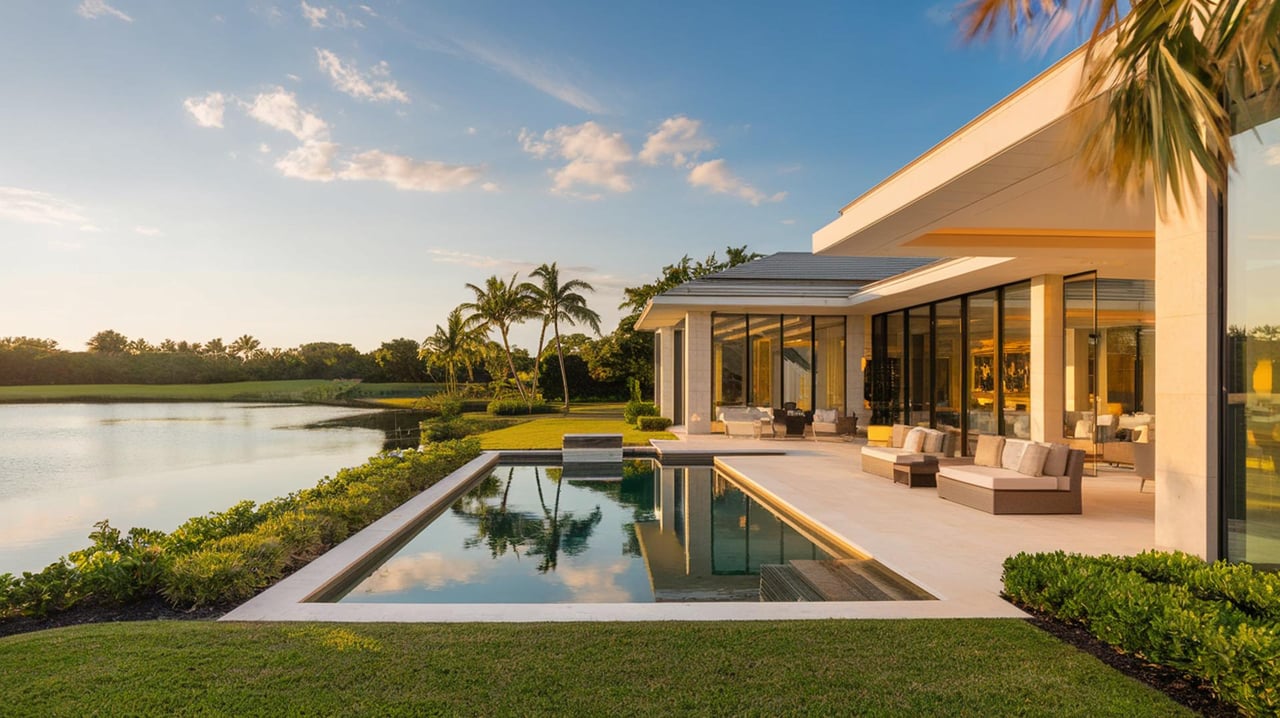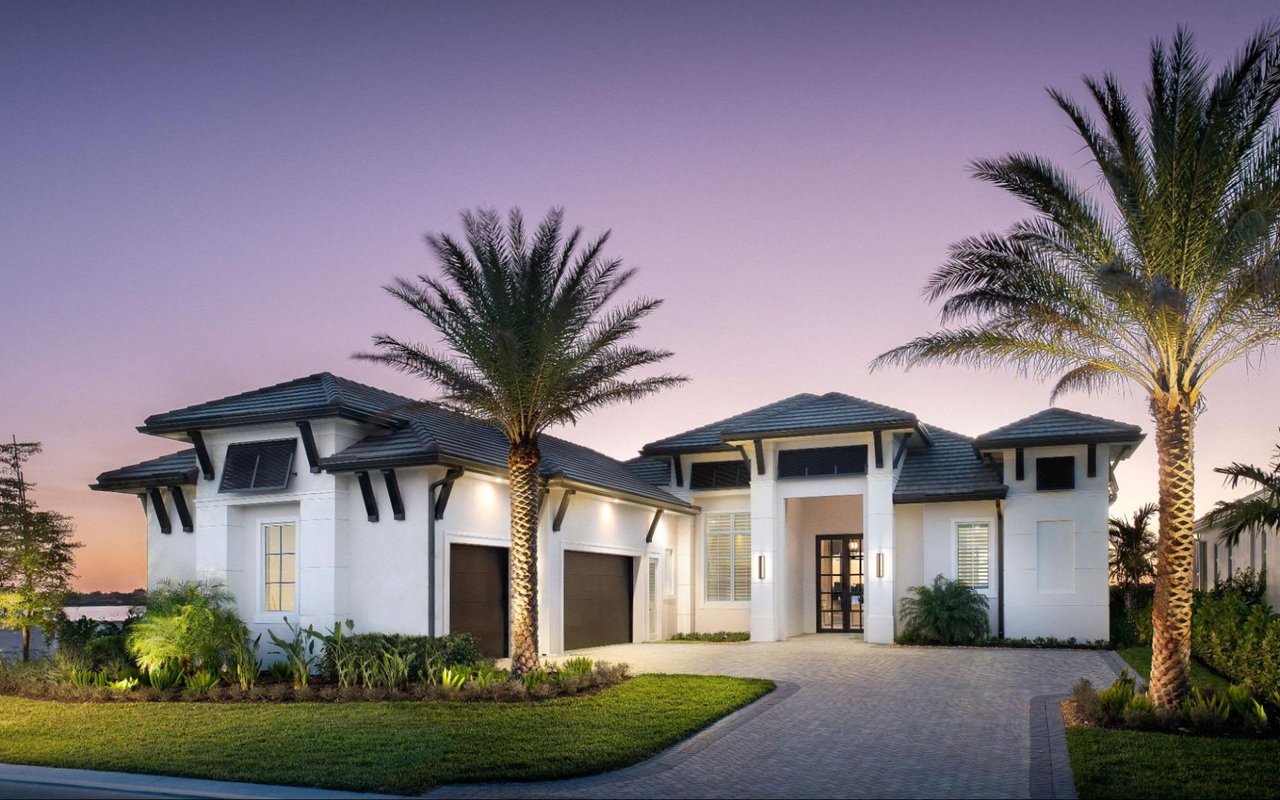
Two listings on the same Cape Coral canal, same 3/2 layout, same seawall vintage. One is priced at $735,000. The other closes at $410,000. Both use the phrase "Gulf access" in the MLS. Both are, technically, telling the truth.
The gap is not view, finish, or lot orientation. It is the water route between the dock and open Gulf, and whether a fixed bridge, a lock, or nothing at all sits in it. The reader who understands that route before writing an offer buys a different property than the reader who trusts the listing headline. The thesis of this piece is simple: in Southwest Florida, price on a waterfront home is set less by the water in your backyard than by the infrastructure between you and the Gulf, and a public works decision made in June 2025 just rewrote that math for an entire submarket.
Three tiers hiding inside one MLS phrase
The "Gulf access" field on a Cape Coral listing does not distinguish between direct sailboat access, bridge-restricted access, or lock-mediated access. Local agents and appraisers do, because buyers pay very differently for each. Citywide 2026 year-to-date, the median Gulf-access single-family home in Cape Coral has been running around $730,500 while the median freshwater single-family home sits closer to $405,000, and the offwater median lands near $332,000. That $325,000 gap between Gulf-access and freshwater is real, and the tier split inside "Gulf access" is nearly as large.
| Access tier | Route to open water | Typical Cape Coral 3/2 price (2026 YTD) | Boat this works for |
|---|---|---|---|
| Direct / sailboat access | No fixed bridges, no locks | ~$800,000 and up, with well over $1M for newer or wide-canal | Sailboats, tall flybridges, offshore center consoles |
| Indirect / bridge-restricted | One or more fixed bridges, roughly 9–15 ft clearance | ~$550,000–$700,000 depending on bridge count | Most center consoles, bay boats, pontoons, deck boats |
| Lock or former-lock access | Historically routed through a boat lock | Between indirect and direct, and moving fast right now | Broad, but the transit adds time to every outing |
The direct-access tier concentrates in specific reaches of Southeast and Southwest Cape Coral where the canal empties toward the Caloosahatchee River, San Carlos Bay, and Pine Island Sound without an overhead obstruction. A direct-access lot means, in the phrasing used by Cape Coral agents who grew up on these canals, no bridges and no locks between the seawall and the Gulf. That is the tier buyers overpay for when they do not have to, and underpay for when they assume it costs the same as the indirect canal one block over.
The Chiquita Lock removal, and why SW Cape comps look strange right now
For four decades, boats leaving a large swath of Southwest Cape Coral canals had to pass through the Chiquita Lock before reaching the Caloosahatchee River. Before Hurricane Ian damaged it in 2022, that lock added 20 to 30 minutes each direction to a typical Gulf run. Rather than repair and update the structure, the City of Cape Coral demolished it through the South Spreader Waterway Enhancement Project. The navigable waterway closed on April 1, 2025. Dredging, seawall demolition, and sediment control ran through the spring. All turbidity barriers came out on June 17, 2025, ahead of the projected schedule, and city leaders formally marked the removal on July 25.
Here is why that matters for pricing. Homes on the affected SW canals were, before removal, priced as lock-access, a tier between indirect and direct. On paper, they are now direct-access addresses. Route times have shortened. Sailboat compatibility is a live question again on some reaches, subject to canal depth. Comp analysis pulling sales from 2023 and early 2024 for a home in this footprint is comparing pre-removal water to post-removal water, and the appraiser has to decide how to reconcile them. This is not a theoretical problem. It is the reason a buyer touring three homes today can see wildly different price-per-square-foot outcomes on lots that used to be near-identical.
The 11-foot problem, and other things a listing headline never tells you
Fixed bridges are the second mechanism that reshapes what "Gulf access" means. Common Cape Coral fixed-bridge clearances run from about 9 feet to 15 feet, published at mean high water. A bridge listed at 13 feet may offer only 11 feet during a king tide, and clearance shrinks further with fuel load and passengers. A boat's air draft has to include the T-top, radar arch, and any antenna that will not fold. The U.S. Coast Guard publishes bridge data, and the Waterway Guide bridge listings are a public reference for verifying vertical clearance on a specific route.
The larger fixed structure most buyers ignore is the Cape Coral Bridge itself, which crosses the Caloosahatchee at 55 feet vertical and 90 feet horizontal. That governs the tallest sportfisher or motoryacht that can pass upriver, and Lee County's own Project Development and Environment study confirms the current bridge replacement is not expected to change those numbers because other bridge constraints exist to the north and south.
Canal depth is the other silent variable. SW Cape Coral canals commonly run 6 to 8 feet deep, with arterial canals near the river more consistent than secondary residential runs. A sailboat-compatible route requires both bridge-free passage and enough water at mean low. Any listing that markets to sailboat owners without both is selling the buyer a route they cannot actually run.
The MLS field says "Gulf access." The boat says otherwise. That gap between the sentence and the salt water is where six-figure buyer mistakes happen.
The other numbers that move with the access tier
The access tier is not the only cost that changes with proximity to the Gulf. Three other line items track it closely.
Insurance. Combined flood and wind coverage on a Gulf-access single-family home in Lee County commonly runs $15,000 to $25,000 annually, with premiums stepping up sharply in AE and VE flood zones. Freshwater canal homes more often sit in X zones where lenders do not require flood insurance, and the annual premium delta between an AE and X zone canal home can run $2,000 or more.
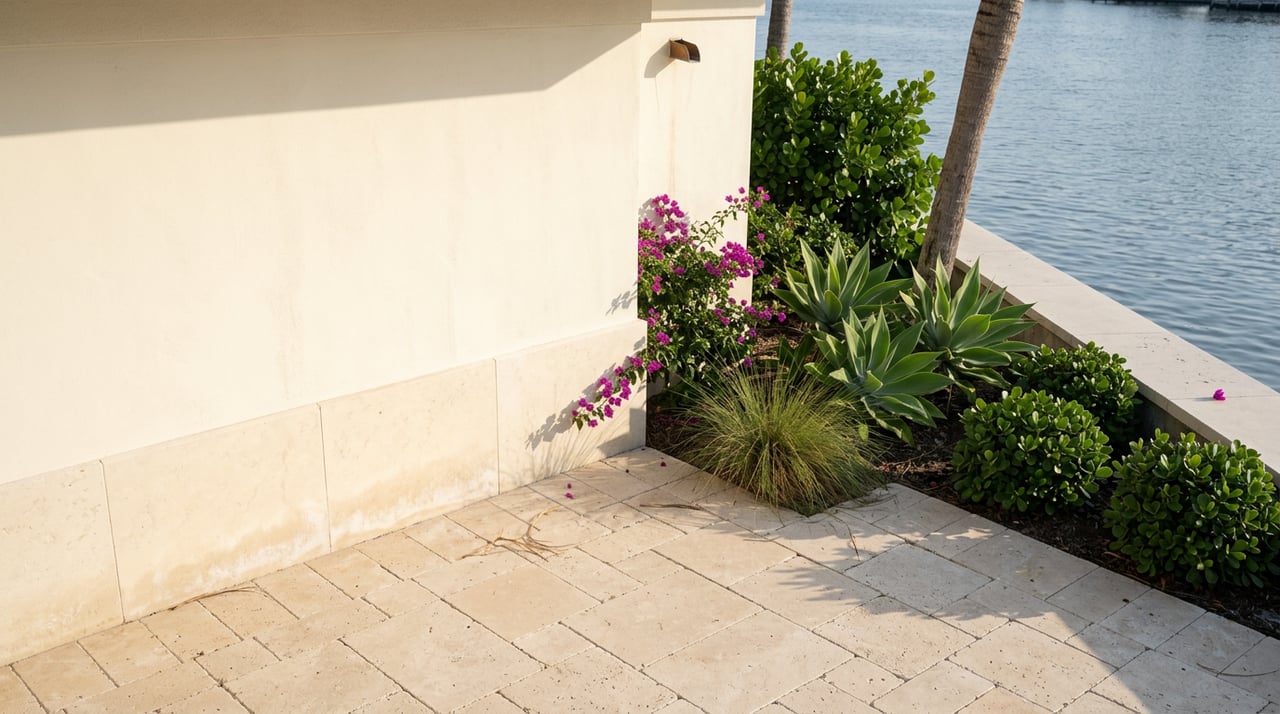
Seawall. Post-Ian, seawall condition drives inspection outcomes and sometimes financing outcomes. Repairs run into the tens of thousands, and marine contractors should inspect the wall independently of the general home inspector. Look for cap cracks, panel deflection, spalling, and rust at hardware. Tidal canals stress a seawall harder than freshwater ones, and older aluminum caps hide deterioration below the tide line.
Appraisal risk. When a listing overstates access, appraisers are the ones who catch it. A home described as "direct Gulf access" that actually routes under a low fixed bridge will draw a different comp set than the listing implies, and the resulting appraisal often lands under contract price. This is a common closing snag on properties where buyer and listing agent both took the MLS field at face value.
Questions to answer before you sign the offer
Every waterfront file should have documented answers to these before contract, not during the inspection period.
- Exact water route from the dock to the target pass, measured on a NOAA chart rather than a road map
- Every fixed and movable bridge on that route, with vertical clearance at mean high water and the operator's contact
- Your boat's air draft with antennas up, radar included, and a margin for tide and loading
- Documented canal depth at mean low water, plus the last dredging date and who is responsible for future dredging
- Seawall age, materials, permit history, and a marine-contractor opinion
- Dock and lift permits pulled from the City of Cape Coral or Lee County
- Flood zone confirmed against current FEMA maps, with a written insurance quote in hand
- HOA or deed restrictions on dock size, vessel length, and lift capacity
FAQ
Did the Chiquita Lock removal change my property taxes? The removal changes access classification and, over time, comp values. Property tax assessments follow the assessor's schedule and market evidence, not the moment a lock is demolished. A revaluation reflecting post-removal comps will show up on future tax rolls once enough sales close.
Is a home advertised as "sailboat access" always suitable for a sailboat? Not automatically. Sailboat compatibility requires both a bridge-free route and adequate depth at mean low water for the boat's keel. Verify draft against canal soundings and confirm no overhead obstructions, including at your own dock, before assuming the listing language holds.
How do I compare a bridge-restricted Cape Coral home to a lakefront home in a community like Miromar Lakes or Esplanade Lake Club? They are different products. Bridge-restricted Gulf access buys you saltwater boating with a route penalty. A lakefront home in a private community buys you a controlled body of water, amenity access, and no Gulf run at all. The comparison is lifestyle first, appraisal comps second, and the two tiers do not share a comp set.
Work with a team that reads the route, not the headline
Waterfront pricing in Lee and Collier counties rewards the buyer who verifies bridge clearance, canal depth, seawall condition, and post-removal access status before writing an offer. That verification is what our team does on every waterfront file, whether the target is a direct-access lot in Southeast Cape, a re-rated SW canal home, or a lakefront estate in an amenity community. If you are comparing properties across tiers and want an honest read on what your money actually buys, Waterfront Lifestyle Group can walk the route with you. Work with us and get your waterfront home valuation.